Knee & Hip Pain
Knee Pain Physical Therapy in Orlando, FL
Most knee pain does not require surgery. The right physical therapy finds what is actually driving the pain and fixes it. Not just manages it.
Request an Appointment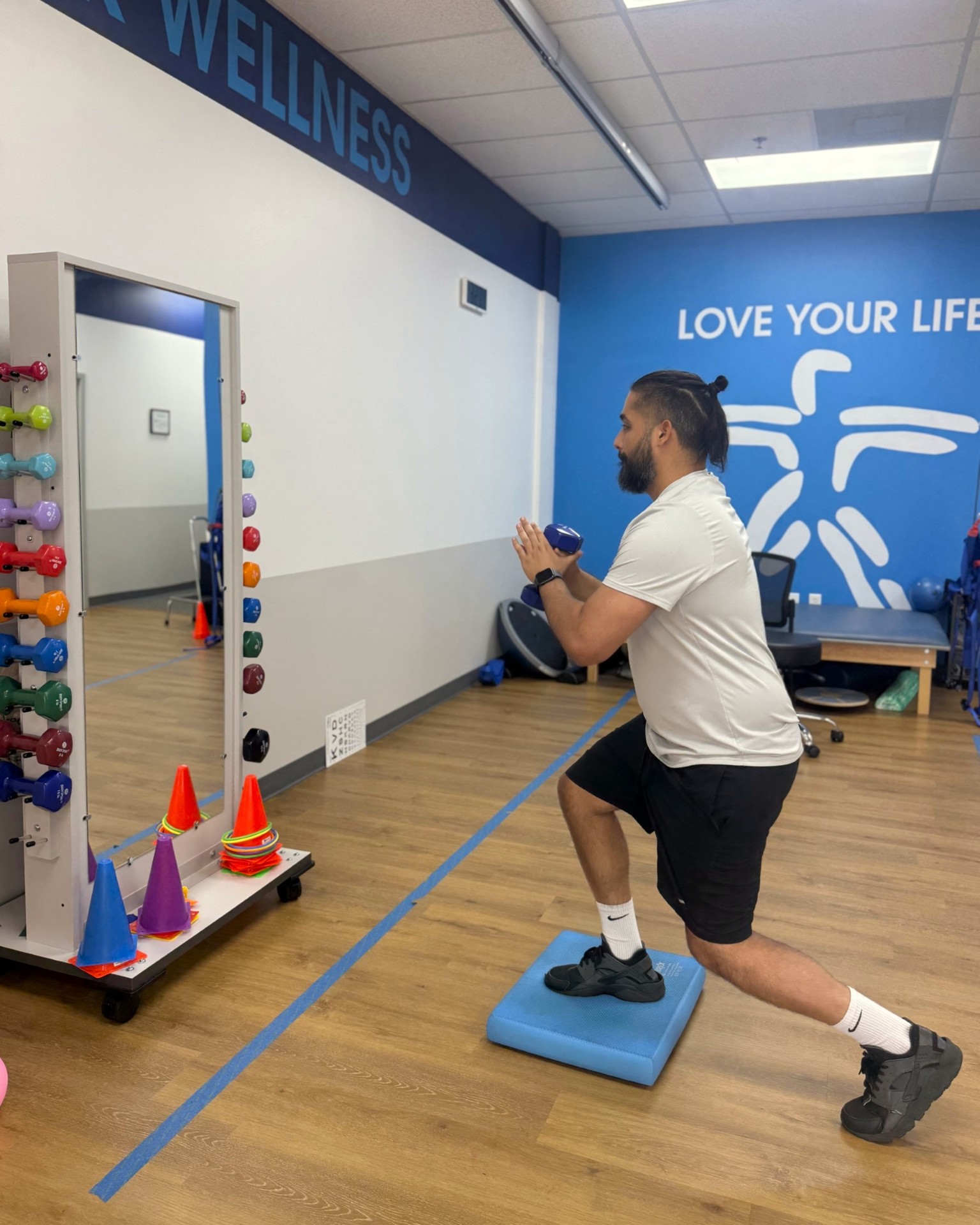
Why Your Knee Hurts
Knee pain is one of the most common conditions we treat — and one of the most misdiagnosed. Patients come in convinced they need surgery or that their knee is just worn out. Most of the time, the knee itself is not the whole story.
The knee is a hinge joint. It does what the hip and ankle tell it to do. When those joints are weak or stiff, the knee compensates. Do that long enough and it breaks down.
A good physical therapist does not just treat the knee. They look at the whole chain — why the knee is under stress, where the breakdown started, and what needs to change for the pain to stop coming back.
That is what we do here.
Common Knee Conditions We Treat
Knee pain has many causes. These are the ones we see most often.
Osteoarthritis
Wear-related joint degeneration causing stiffness, aching, and reduced range of motion. PT can significantly reduce pain and improve function without surgery.
Meniscus Tears
Cartilage damage from twisting injuries or degeneration. Many meniscus tears respond well to physical therapy without surgical intervention.
Patellar Tendinopathy
Pain at the front of the knee from overuse of the patellar tendon. Common in runners, jumpers, and active adults.
IT Band Syndrome
Tightness and pain on the outer knee caused by a tight iliotibial band. A classic overuse injury in runners and cyclists.
Post Knee Replacement
Rehabilitation after total or partial knee replacement to restore strength, range of motion, and normal walking patterns.
ACL & Ligament Injuries
Sprains and tears of the ACL, MCL, or other knee ligaments — from acute injury or surgical reconstruction recovery.
What Physical Therapy Does for Knee Pain
The goal is not to manage your pain indefinitely. The goal is to find what is driving it and correct it.
At FYZICAL Therapy Orlando, your evaluation looks at your knee, your hip, your ankle, and how you move as a whole. Most patients are surprised to find that their knee pain is being driven by weakness somewhere entirely different.
Treatment typically involves:
Manual Therapy
Hands-on joint mobilization and soft tissue work to reduce pain, improve mobility, and restore normal joint mechanics.
Strength & Stability Training
Targeted strengthening of the hip, glute, quad, and hamstring muscles that support and protect the knee joint.
Gait & Movement Retraining
Correcting the movement patterns that are putting excess stress on your knee — so the pain does not keep coming back.
Home Exercise Program
A structured program to continue progress between sessions and maintain results after discharge.
What to Expect
- 01
Full Evaluation
Your therapist assesses not just your knee but your entire movement chain — hip strength, ankle mobility, gait pattern, and functional movement. That context is what most clinics skip.
- 02
Your Plan of Care
You leave the first visit with a clear plan — what we are addressing, how we are addressing it, and a realistic timeline. No vague answers.
- 03
One-on-One Treatment
Every session is with your therapist. Same person every visit. No aides, no rotating staff, no starting over.
- 04
Measurable Results
We track your progress against real goals — pain levels, strength, range of motion, function. When you hit them, you are done.
"Paul is the best physical therapist I have ever worked with. After a few weeks, my knee is even better than it was before I fractured it. He becomes a partner in helping you maximize your quality of life."
Why Patients Choose FYZICAL Therapy Orlando for Knee Pain
Knee pain is one of the most overtreated conditions in medicine. Patients get referred to surgery before conservative treatment has been given a real chance. They bounce between clinics where they see a different face every visit and never get a consistent plan.
Here, your therapist knows your history from day one. Paul Pacpaco has helped patients recover from knee fractures, replacements, ligament tears, and chronic arthritis — and his patients consistently describe results they did not expect to achieve.
One-on-one care is not a marketing phrase. It is the only way we work.
Hip Pain: Often Connected to Your Knee
Hip and knee pain rarely exist in isolation. Weak hip abductors cause the knee to collapse inward under load. Tight hip flexors change pelvic position and alter how force travels through the knee. Limited hip rotation forces the knee to compensate with every step.
If you have knee pain, your hips are part of the evaluation. If you have hip pain, your knee and ankle are too. That whole-chain approach is what separates a good outcome from a temporary fix.
We treat hip pain with the same one-on-one, outcome-focused approach — from arthritis and bursitis to post-replacement rehab and labral issues.
Common Questions About Knee Pain and Physical Therapy
Get Started Today
Ready to Get Back to Living?
Tell us what is going on. We will call you back, figure out if we are the right fit, and get you scheduled. A real person picks up the phone here.